
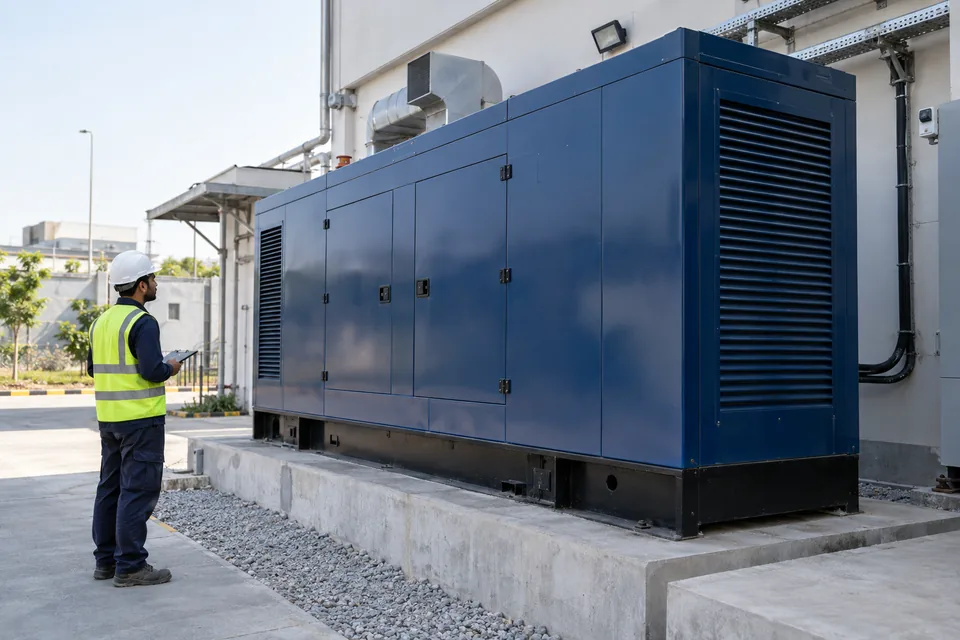
Start with a load list, starting requirements and operating duty. A kVA figure alone is not a complete generator specification. Give the supplier enough information to check both the equipment and the installation.
A useful enquiry starts with the operation
Before asking for a price, describe what happens when the power goes off. Which equipment must continue? Which can wait? How long does the site need to run? A shop, a workshop and a production facility may each need a different approach even when their monthly electricity use looks similar.
Create two lists: essential loads and loads that may be switched off. Include a plain-language description beside each item. This helps the supplier ask better questions and gives your own team a clear record of what the proposed system is meant to support.
Record demand and starting behavior
List the equipment quantity and nameplate electrical information. Where an item contains a motor, note how it starts and whether several motors start together. Running demand and starting demand are different sizing inputs; a total of the running loads does not settle the choice.
Also record whether loads run continuously or only for part of the day. Ask the project’s electrical professional to review the list. The purpose of this preparation is to provide sound inputs, not to replace the final engineering assessment.
Understand the rating being offered
Ask whether the quoted rating is standby or prime and request the supporting datasheet. These ratings relate to different intended duties. Record the offered voltage, frequency and phase arrangement beside the capacity so alternative quotations can be compared consistently.
Gateway’s stated overall generator range is 20–1250 kVA. This does not mean every brand, enclosure and model is available at every capacity. The quotation should name the actual generating set and describe its engine, alternator, controls and enclosure.
Treat the site as part of the specification
A generator needs a practical installation location. Record delivery access, available space, operating environment and nearby occupied areas. Ask who is responsible for the base, connections, fuel arrangements, exhaust route and ventilation design.
An enclosure changes the installation discussion. If a customized canopy is needed, state the space and access constraints from the start. If an ATS is required, include the source and load information. Never assume that one line saying installation covers every associated activity.
Compare quotations line by line
Create a comparison sheet with columns for the offered model, duty, complete configuration, included accessories, installation work, commissioning and commercial terms. Mark unclear items as questions instead of treating them as included.
Ask for the scope of testing and the documents provided at handover. Keep final pricing, availability, lead time and warranty terms tied to the dated quotation. This makes differences visible without reducing the choice to a single headline price.
Your enquiry checklist
Prepare the equipment list and required operating hours. Add the site location, preferred brand, any known capacity requirement and photographs of the intended installation area. Note who will coordinate access and technical questions.
Use Gateway’s enquiry planner to organise these details into a brief. Then compare the proposed equipment with your original priorities. A clear brief gives both sides a better basis for resolving missing information before an order is agreed.
Explore the next step
Technical reading
The preparation checklists are editorial guidance. These manufacturer and technical references support the underlying equipment concepts.