
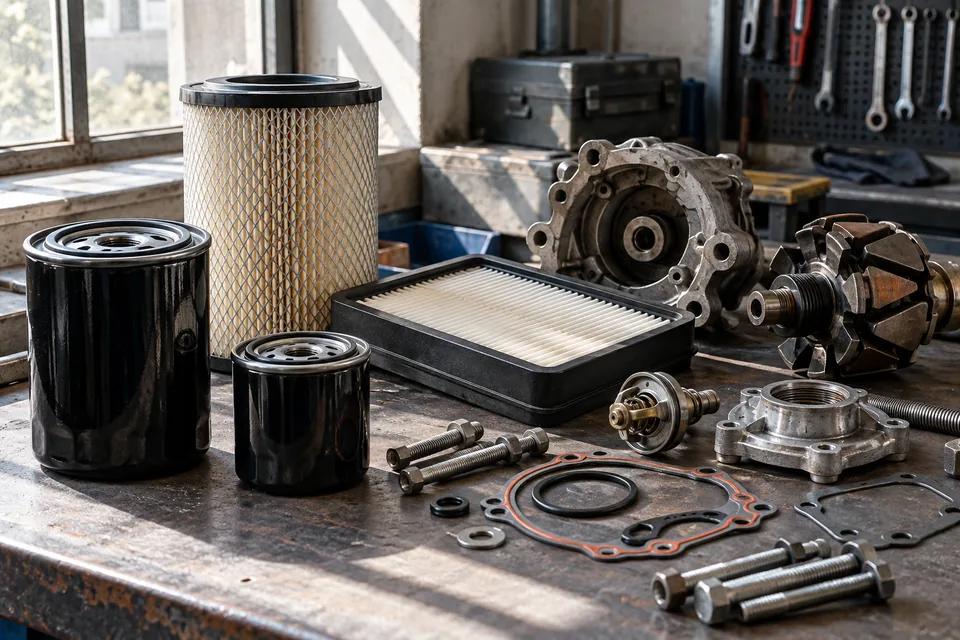
Identify the engine and existing component before requesting a replacement. Part numbers, serial numbers, photographs and application details reduce ambiguity. The engine-specific manual should guide maintenance requirements.
Begin with identification
A request for a generator filter or radiator leaves many questions open. Start with the generator and engine identification plates. Record the make, model and serial number, then photograph the existing part and any visible reference.
Keep the images clear enough to read. If a label is damaged, say so and include the information you do have. Avoid guessing a reference from a similar-looking product. The purpose is to give the supplier a reliable starting point for a compatibility check.
Explain why the part is needed
State whether the request is for planned servicing, a confirmed fault or investigation of a symptom. Describe the symptom in ordinary language and mention any recent maintenance or changes to the equipment.
A parts enquiry is not a diagnosis by itself. If the cause has not been established, make that clear. Buying a replacement before the fault is understood can leave the original issue unresolved. Ask what further identification or inspection is needed before a part is proposed.
For filters, record each reference separately
Distinguish air, oil and fuel filtration. Write down the existing reference and quantity for each item, rather than asking for one unspecified service kit. Include the engine serial number with the list.
Use the engine’s applicable operation and maintenance guidance to plan intervals. Perkins notes that engine-specific maintenance schedules matter; a single generic interval should not be substituted for the correct manual. A standby engine still needs an appropriate maintenance routine.
For radiators, include the installation context
Provide photographs showing the whole radiator, mounting arrangement and connections. Record accessible dimensions and identify the generator application. Mention enclosure changes or other cooling-related work that has already taken place.
Do not assume that physical size is the only matching criterion. Ask the supplier to confirm the offered component against the application. If overheating is the symptom, the wider cooling and airflow arrangement belongs in the technical assessment.
For control modules, document the current setup
Record the module make and model and share clear front and connection-side photographs where these can be obtained safely by the responsible technician. Include the reported fault and the functions currently used.
Ask whether replacement requires changes to wiring, configuration or supporting equipment. Keep these tasks and the final settings record in the service scope. A module that fits the panel opening may still require a different setup.
Close the loop with a written offer
Ask for the proposed part number, brand, stated compatibility, quantity and delivery scope. Keep applicable warranty and return conditions attached to the quotation. Make clear whether installation or configuration is included.
Gateway’s parts scope includes radiators, filters, control modules and related components. Use the relevant category page to prepare your enquiry, then retain the accepted specification with your maintenance records. That record makes the next enquiry easier and helps avoid repeating the same identification work.
Explore the next step
Technical reading
The preparation checklists are editorial guidance. These manufacturer and technical references support the underlying equipment concepts.